
For many homeowners, the heating oil tank is easy to forget about. It sits quietly in the basement, garage, or outside the home, doing its job without much attention. As long as the heat works and oil is being delivered, it’s often assumed that everything is fine. However, an aging or deteriorating oil tank can become a serious issue if it’s ignored for too long. Knowing when to start thinking about oil tank replacement can help you avoid unexpected problems, costly damage, and unnecessary stress.
At Yankee Oil, we regularly work with homeowners who didn’t realize their oil tank was nearing the end of its lifespan. In many cases, the warning signs were subtle or easy to overlook. This guide is designed to help you understand how oil tanks age, what to watch for, and how to decide when replacement makes more sense than waiting.
Why Oil Tanks Are Often Overlooked
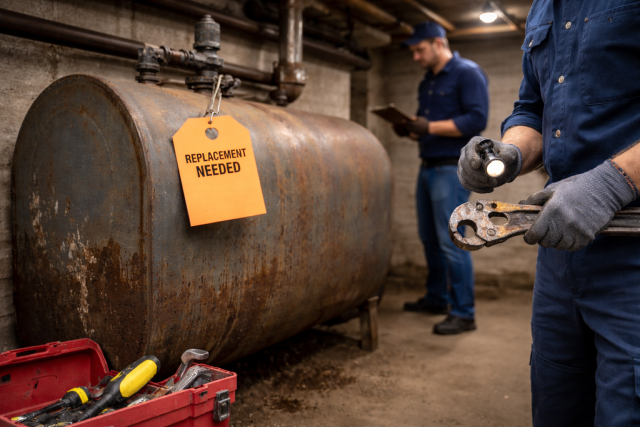
Unlike a furnace or boiler, an oil tank doesn’t have moving parts or obvious performance changes. When a heating system starts to struggle, homeowners usually notice right away. Oil tanks, on the other hand, can deteriorate quietly over time. Rust, corrosion, and material fatigue often develop slowly, especially in tanks that are exposed to moisture or temperature changes.
Because oil tanks don’t usually cause day-to-day problems until something goes wrong, they tend to stay out of mind. Unfortunately, when an oil tank does fail, the consequences can be significant. Leaks can damage floors, foundations, and surrounding property, and cleanup costs can be substantial. This is why proactive oil tank replacement is often the safer and more cost-effective choice.
How Long Do Heating Oil Tanks Typically Last?
The lifespan of a heating oil tank depends on several factors, including the type of tank, where it’s located, and how well it has been maintained. Many standard steel oil tanks last between fifteen and twenty-five years. Some may fail sooner, while others last longer, but age alone increases risk.
Indoor tanks tend to last longer than outdoor tanks because they’re protected from weather and extreme temperature changes. Outdoor tanks are exposed to rain, snow, humidity, and fluctuating temperatures, all of which can accelerate corrosion. Underground oil tanks have their own challenges, as moisture and soil conditions can cause deterioration that’s difficult to detect until a problem occurs.
If your oil tank is approaching or past the twenty-year mark, it’s a good time to start thinking seriously about oil tank replacement, even if there are no obvious issues yet.
Subtle Signs Your Oil Tank May Be Nearing the End
Oil tanks don’t always fail dramatically. In many cases, small warning signs appear first. These signs are easy to miss unless you know what to look for.
You may notice rust forming on the exterior of the tank, especially near the bottom where moisture tends to collect. Even surface rust can be an early indicator of deeper corrosion. A tank that looks slightly damp or has oil residue underneath may also be a cause for concern.
Another sign is a strong oil odor in the basement or around the tank. While a faint smell can sometimes occur during deliveries, persistent odors may suggest a slow leak or failing connection. Unstable or uneven tanks can also signal structural weakening, particularly if the tank legs or base are deteriorating.
If you observe any of these issues, it’s wise to have the tank inspected and begin discussing oil tank replacement options.
Above-Ground vs. Underground Oil Tanks
Not all oil tanks are created equal, and their location plays a major role in replacement considerations.
Above-ground oil tanks are the most common in New England homes. These tanks are easier to inspect, maintain, and replace. Because they’re visible, problems are more likely to be caught early. Replacement is usually straightforward and can often be completed in a single day.
Underground oil tanks present a different set of concerns. Since they’re buried, corrosion and leaks can go unnoticed for years. By the time a problem is discovered, environmental contamination may have already occurred. Many homeowners choose to replace underground tanks proactively or convert to above-ground tanks to reduce long-term risk.
Understanding the type of tank you have is an important part of deciding when oil tank replacement makes sense.
The Risks of Delaying Oil Tank Replacement
Waiting too long to replace an aging oil tank can lead to serious consequences. Oil leaks can damage flooring, drywall, and stored belongings. In severe cases, oil can seep into soil or groundwater, leading to expensive cleanup and potential environmental concerns.
Insurance coverage for oil tank leaks varies, and older tanks may not be fully covered. Some policies exclude damage caused by gradual leaks or aging equipment. This means homeowners could be responsible for the full cost of repairs and remediation.
Replacing an oil tank before it fails helps avoid these risks and provides peace of mind, especially during the heating season when access to service may be limited.
When Inspection Is Enough—and When Replacement Is Smarter
Regular inspections are important, but there comes a point when replacement is the more practical option. If a tank is relatively new and shows no signs of deterioration, monitoring and maintenance may be sufficient.
However, if the tank is older, has visible corrosion, or has had past issues, continued repairs may only delay the inevitable. In these cases, oil tank replacement is often the safer and more cost-effective solution. A new tank reduces the likelihood of leaks and can improve overall system reliability.
A professional inspection can help determine whether your tank still has years of safe operation left or if replacement should be planned sooner rather than later.
What to Expect During Oil Tank Replacement
Many homeowners are surprised by how straightforward oil tank replacement can be when handled by experienced professionals. The process typically begins with safely pumping out any remaining oil. The old tank is then disconnected and removed, followed by the installation of the new tank.
Modern oil tanks are designed with improved materials and safety features, offering better corrosion resistance and durability. Once installed, the system is tested to ensure proper operation and safety before oil is transferred back into the tank.
Most replacements can be completed in a relatively short time, minimizing disruption to your home and heating needs.
Cost Considerations and Long-Term Value
The cost of oil tank replacement varies based on tank size, location, and installation requirements. While replacement is an investment, it often saves money in the long run by preventing costly damage and emergency repairs.
Newer tanks also provide improved reliability, which can help avoid heating disruptions during cold weather. When weighed against the potential expense of a leak or failure, proactive replacement is often the more economical choice.
Discussing options with a trusted fuel provider can help you understand what’s involved and plan accordingly.
Why Working with a Trusted Local Provider Matters
Oil tank replacement is not a DIY project. Proper handling, installation, and disposal require experience and knowledge of safety standards. Working with a local provider like Yankee Oil ensures the job is done correctly and in compliance with regulations.
A knowledgeable team can also help assess your current setup, recommend the right tank for your home, and answer questions about maintenance and future care. This level of support makes the replacement process smoother and less stressful.
When Should You Start Thinking About Replacing Your Oil Tank?
If your oil tank is approaching twenty years old, showing signs of wear, or simply hasn’t been evaluated in a long time, now is the right time to start the conversation. Planning oil tank replacement before a problem arises gives you control over timing and costs.
Being proactive allows you to protect your home, avoid emergencies, and ensure reliable heating when you need it most.
Final Thoughts
Oil tanks may not demand daily attention, but they play a critical role in your home’s heating system. Understanding their lifespan and recognizing early warning signs can help you make informed decisions. Oil tank replacement, when done at the right time, offers peace of mind, safety, and long-term value.
If you’re unsure about the condition of your oil tank, reaching out to a trusted provider for guidance is a smart next step. Taking action now can help you avoid bigger issues later and keep your home comfortable and secure for years to come.
