
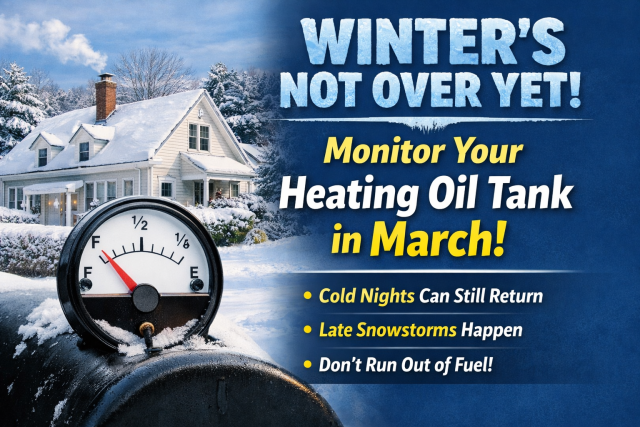
 As winter begins to loosen its grip and the first hints of spring appear, many homeowners start to assume that the cold weather is finally behind them. While longer days and slightly warmer temperatures are welcome signs of the changing seasons, the reality is that winter weather often lingers well into March throughout Connecticut.
For residents in communities like Mansfield, the transition from winter to spring can be unpredictable. One day may feel mild and sunny, while the next may bring freezing temperatures or even a late-season snowstorm. Because of these fluctuations, it’s important not to assume that your heating needs are over just because the calendar says spring is around the corner.
Homes that rely on heating oil can still burn through fuel quickly during cold nights and unexpected cold fronts. Running out of oil late in the season is actually more common than many homeowners realize, and it can lead to inconvenient and uncomfortable situations.
Don’t Let Your Oil Tank Run Low
One of the most common mistakes homeowners make during late winter is simply forgetting to monitor their heating oil levels. After months of cold weather, it’s easy to believe that there’s enough oil left in the tank to last until spring.
However, March can still bring significant heating demand. Overnight temperatures often drop below freezing, causing heating systems to run frequently throughout the night. A few colder nights in a row can quickly use more heating oil than expected.
If your oil tank is approaching the quarter-tank level, now is the time to schedule a delivery. Staying ahead of your fuel supply helps ensure your home stays warm and comfortable through the final stretch of winter.

March Weather in Connecticut Can Still Be Unpredictable
March weather throughout Connecticut is known for its ups and downs. It’s not unusual for temperatures to swing dramatically from one day to the next.
During the daytime, temperatures may climb into the 40s or even 50s, making it feel like spring has arrived. But once the sun goes down, temperatures often fall back below freezing.
These nighttime temperature drops are when your heating system works hardest. Your furnace or boiler must maintain a comfortable indoor temperature even when the outdoor air becomes significantly colder.
Late winter storms can also bring sudden cold snaps. A single weather front can push temperatures down for several days, increasing heating demand across the region.
Because of this, homeowners who stop monitoring their heating oil supply too early may find themselves running dangerously low just when they still need heat the most.
Why Homeowners Often Run Out of Oil in Late Winter
Running out of heating oil during March happens more often than many people expect. There are several reasons why this tends to occur toward the end of the heating season.
First, many homeowners check their oil tanks less frequently as winter progresses. Once the harshest part of winter seems to pass, people naturally become less focused on heating needs.
Second, fluctuating temperatures can make oil usage difficult to predict. A warm week might give the impression that very little oil is being used, only for consumption to spike when temperatures drop again.
Finally, homeowners sometimes delay scheduling their final delivery of the season. Unfortunately, late-season cold weather can quickly prove that assumption wrong.
The Problems That Can Happen When You Run Out of Heating Oil
Running out of heating oil isn’t just inconvenient. It can also cause several mechanical issues with your heating system.
When an oil tank runs empty, air can enter the fuel line. This prevents the burner from operating properly and often requires the system to be bled before it can restart.
Oil burners also typically shut down automatically when they detect a lack of fuel. Even after your tank is refilled, the system may need professional attention to restart safely.
In some cases, running out of oil can even lead to emergency service calls during cold weather, which can be stressful for homeowners and their families.
The good news is that these problems are easy to avoid by keeping a close eye on your oil tank levels until the heating season truly ends.
How Often Should You Check Your Oil Tank?
Checking your oil tank during late winter is a simple habit that can prevent major problems.
Most homeowners find that checking their oil tank once a week is sufficient during March. If the gauge begins approaching one-quarter full, it’s usually time to schedule a delivery.
Keeping your tank above this level provides a comfortable buffer in case temperatures suddenly drop or your heating system runs more frequently than expected.
For homes with smaller tanks or older heating systems, monitoring fuel levels even more frequently may be helpful.
Signs Your Heating System Is Still Working Hard
Even when daytime temperatures begin to feel mild, your heating system may still be operating frequently behind the scenes.
You might notice that your furnace runs regularly during overnight hours. Rooms near exterior walls may still feel cooler than the rest of the home. Drafts around doors and windows can also cause your heating system to cycle more often.
These are all signs that your heating system is still actively working to keep your home comfortable.
Avoid a Late-Winter Heating Emergency
No homeowner wants to deal with a heating emergency when temperatures drop unexpectedly. Fortunately, preventing this situation is usually straightforward.
Continue monitoring your oil tank levels regularly and schedule deliveries before the tank gets too low. If your heating system seems to be running frequently, consider that your oil usage may be higher than expected.
If you’re unsure about your current oil level or want to avoid the risk of running out, scheduling a heating oil delivery now can provide peace of mind for the rest of the season.
Taking proactive steps now can help ensure that your home remains warm and comfortable during the final weeks of winter.
Smart Ways to Reduce Heating Oil Usage
While you still need heat during March, there are several ways to reduce energy consumption while keeping your home comfortable.
Lowering your thermostat by just a couple of degrees can noticeably reduce heating oil usage. Even small adjustments can make a difference over time.
Sealing drafts around doors and windows can also help prevent warm air from escaping. Weatherstripping and door sweeps are simple improvements that can make your heating system more efficient.
Taking advantage of sunlight is another helpful strategy. Opening curtains during sunny days allows natural warmth to enter your home, reducing the amount of heating required.
These small adjustments can help stretch your remaining oil supply while maintaining a comfortable indoor environment.
Late Winter Is a Good Time for Heating System Maintenance
As the heating season begins winding down, homeowners should also start thinking about system maintenance.
Routine heating system maintenance can improve efficiency and extend the lifespan of your furnace or boiler. During a professional tune-up, technicians inspect key components, clean burners, replace filters, and ensure the system is operating safely.
Addressing maintenance needs early can prevent small issues from turning into larger problems later on.
Scheduling service during the spring or summer also helps avoid the busy fall season when heating companies receive a surge of service requests.
Planning Ahead for Next Winter
Even though winter may still be lingering, the end of the heating season is actually a great time to begin planning for the future.
Some homeowners use this opportunity to evaluate whether their heating equipment is still operating efficiently. Older systems may consume more fuel than necessary, which can increase heating costs over time.
Upgrading to a more energy-efficient system can help reduce fuel usage while improving overall comfort.
Other homeowners focus on improving insulation or sealing air leaks throughout the home. These improvements can significantly reduce heating demands during future winters.
By taking proactive steps now, you can help ensure your home stays warm, efficient, and reliable when cold weather returns.
Stay Prepared Until Winter Is Truly Over
Although the arrival of spring is just around the corner, winter in Connecticut often holds on a little longer than expected. Cold nights and sudden weather changes are still very much possible during March.
Keeping a close eye on your heating oil supply during this transitional period can help prevent unnecessary stress and unexpected heating issues.
Monitoring your tank level, scheduling timely deliveries, and maintaining your heating system are simple steps that can make a big difference in your comfort and peace of mind.
If you want to make sure your home stays warm until spring fully arrives, contact your local heating oil provider today to schedule a delivery or heating system service.
Staying proactive now ensures that you and your family can comfortably finish out the heating season without worrying about running out of fuel.
